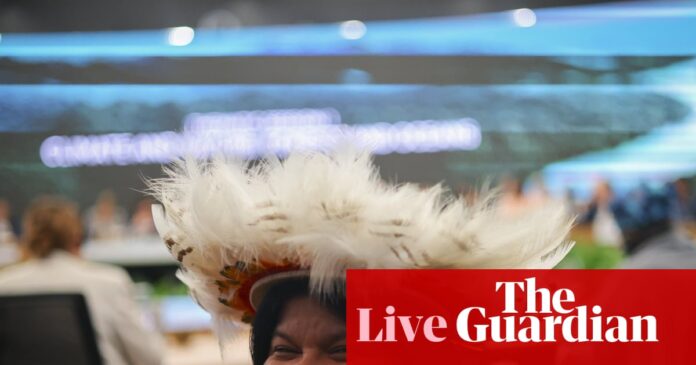

US TV networks absent at Cop30: a “tragic abdication” of civic responsibility
Jonathan Watts
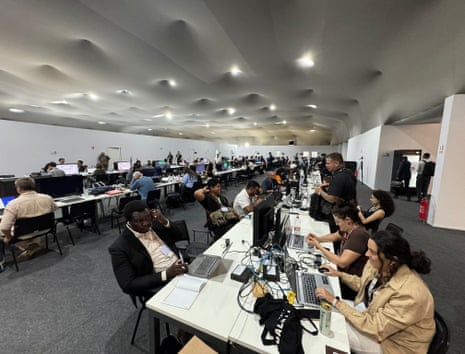
After a slow start, the media centre at Cop30 is a hive of activity. But there is a notable lack of TV reporters from the United States. A big part of the reason, of course, is that President Donald Trump has abandoned the Paris agreement. But why should US networks fall in step with a politician? And how can the US public be aware of the dangers of global heating – and the range of possible solutions – if the major TV broadcasters fail to report on the year’s biggest global gathering of climate-related scientists, diplomats, businesspeople and activists?
For insightsthe Guardian spoke to Mark Hertsgaard, executive director of New York-based Covering Climate Now, and environment correspondent for The Nation. Here is an edited version of the conversation:
It’s a shame that not one of the US TV networks have sent cameras or reporters to Belem to cover COP30. This is arguably the most important climate summit since the 2015 conference that produced the Paris Agreement, both because the devastating impacts of overheating the planet are even more evident today and because the past decade’s extraordinary advances in green technologies offer a genuine opportunity to finally phase out oil, gas, and coal without economic penalty. Yet with laudable exceptions such as the New York Times and the Associated Press, most US news media are absent. It’s a tragic abdication of our civic responsibility to inform the public and hold power to account.
To be clear, most climate journalists I’ve spoken with privately want to be here—it’s their newsroom managers and corporate bosses who’ve decided against it. The rationale is usually budgets—it costs money to fly journalists to Belem, house them, etc. But how newsrooms spend their limited budgets still reflects the editorial priorities of those newsrooms. And the fact is that climate change is not an editorial priority for many US newsrooms, despite the very visible evidence of the dangers of climate change—see the monster storm ravaging the Philippines today, the recent Hurricane Melissa in Jamaica, and countless others. This reflects a distressing lack of “climate literacy” among editorial decision makers at many US newsrooms; climate change is seen as just one more issue, a box to check every once in a while, rather than a defining story of our time.
Hertsgaard also said deregulation in the US had eroded the TV networks’ sense of duty to produce serious public service journalism. As a result he added:
In the name of the free market, corporate owners of networks were no longer expected to do anything but make as much money as possible. Over time, that led to the situation prevailing today, when the corporate owners of all the networks routinely demand their news divisions to make healthy profits. Which in turn leads to the massive staff cutbacks we’ve seen over the past 18 months at all of the Big Three network news divisions, most recently at CBS News, which gutted virtually its entire climate unit. The corporate owners’ bottom lines get bigger, but the American public is left increasingly misinformed about the world around them.
Key events
States are ignoring soil’s potential as a carbon sink
A new UN backed report published today (one of approximately a million we’re expecting this week) reveals that 70% of countries do not feature soil as a climate change mitigation tool in their nationally determined contributions (NDCs), their plans to reduce emissions under the Paris agreement that states must submit every five years.
The new analysis conducted by Save Soil, a global grassroots movement to address the rapid degradation of agricultural soils, also found that as much as 27% of the emission cuts needed to keep global heating below a 2°C rise could be achieved and sequestered by restoring agricultural soil health. Regenerative farming practices that revitalize soil health such as cover cropping and crop rotation could also reduce fertilizer-related emissions by as much as 80% by 2050. Globally, roughly 40% of the planet’s land is degraded.
The absence from NDCs is pretty shocking given that soils are the world’s largest carbon sink after oceans, according to research by the UN Food and Agriculture Organization (FAO) back in 2021.
Agriculture accounts for almost 30% of global emissions, and also has the potential to become a significant source of carbon capture. This, however, also remains largely absent in the NDCs submitted this year, which mostly focus on the transformation of energy and transport sectors as mitigation solutions. Countries mostly include agriculture and soil in their adaptation plans, and not as a mitigation measure to cut emissions. Praveena Sridhar, chief scientific and policy advisor of the Save Soil movement, said:
The world has a 45% larger-than-expected carbon bank right under its feet, yet our current climate mitigation plans largely fail to treat soil health as the powerful, cost-effective climate solution it is. We urge policymakers to immediately prioritize soil health through regenerative agricultural practices as part of their climate mitigation and financing strategies.
On mitigation specifically, the ICJ climate ruling in July 2025 lifted 1.5 Celsius from an aspirational target to a definitive legal benchmark for which states could be held legally accountable. The ICJ ruling requires countries to ensure their NDC reflects the “highest possible ambition”.
The omission of soil and agriculture from mitigation plans in the NDCs makes little sense.
US TV networks absent at Cop30: a “tragic abdication” of civic responsibility
Jonathan Watts
After a slow start, the media centre at Cop30 is a hive of activity. But there is a notable lack of TV reporters from the United States. A big part of the reason, of course, is that President Donald Trump has abandoned the Paris agreement. But why should US networks fall in step with a politician? And how can the US public be aware of the dangers of global heating – and the range of possible solutions – if the major TV broadcasters fail to report on the year’s biggest global gathering of climate-related scientists, diplomats, businesspeople and activists?
For insightsthe Guardian spoke to Mark Hertsgaard, executive director of New York-based Covering Climate Now, and environment correspondent for The Nation. Here is an edited version of the conversation:
It’s a shame that not one of the US TV networks have sent cameras or reporters to Belem to cover COP30. This is arguably the most important climate summit since the 2015 conference that produced the Paris Agreement, both because the devastating impacts of overheating the planet are even more evident today and because the past decade’s extraordinary advances in green technologies offer a genuine opportunity to finally phase out oil, gas, and coal without economic penalty. Yet with laudable exceptions such as the New York Times and the Associated Press, most US news media are absent. It’s a tragic abdication of our civic responsibility to inform the public and hold power to account.
To be clear, most climate journalists I’ve spoken with privately want to be here—it’s their newsroom managers and corporate bosses who’ve decided against it. The rationale is usually budgets—it costs money to fly journalists to Belem, house them, etc. But how newsrooms spend their limited budgets still reflects the editorial priorities of those newsrooms. And the fact is that climate change is not an editorial priority for many US newsrooms, despite the very visible evidence of the dangers of climate change—see the monster storm ravaging the Philippines today, the recent Hurricane Melissa in Jamaica, and countless others. This reflects a distressing lack of “climate literacy” among editorial decision makers at many US newsrooms; climate change is seen as just one more issue, a box to check every once in a while, rather than a defining story of our time.
Hertsgaard also said deregulation in the US had eroded the TV networks’ sense of duty to produce serious public service journalism. As a result he added:
In the name of the free market, corporate owners of networks were no longer expected to do anything but make as much money as possible. Over time, that led to the situation prevailing today, when the corporate owners of all the networks routinely demand their news divisions to make healthy profits. Which in turn leads to the massive staff cutbacks we’ve seen over the past 18 months at all of the Big Three network news divisions, most recently at CBS News, which gutted virtually its entire climate unit. The corporate owners’ bottom lines get bigger, but the American public is left increasingly misinformed about the world around them.

Oliver Milman
The first lady of Brazil has been talking up local, female-led climate action here in Belém. Rosângela Lula da Silva, who is widely known as Janja, was speaking at the Local Adaptation Champions award ceremony, which was held today in the pavilion area of Cop30, reports Oliver Milman, a Guardian US environment correspondent.
The first lady helped give out four awards to those working on localized climate resilience, and said that she heard “hopes and pain” from women about the climate crisis while traveling around Brazil in her role as an envoy for the UN climate summit. Speaking in Portuguese, Rosângela Lula da Silva, said:
It’s for these women that we have to make this the Cop of implementation, the Cop of truth. We have to get away from the white men in ties and go ahead and take the actions needed to tackle climate change.
Via a translator Janja apologized for the lack of air conditioning (parts of the Belém conference center are rather warm) and said that she is in the process of learning English. She started dating Luiz Inácio Lula da Silva, who is 21 years her senior, in 2017, and they married in 2022 after he was released from prison and the corruption and money laundering convictions against him were annulled.
When Lula began his third term as president in 2023, Janja, his third wife, became the country’s first lady. She previously worked at Itaipu dam, a large hydroelectric dam on the Paraná river located on the border between Brazil and Paraguay, and as a communications advisor to the Eletrobras electric utility.
Dharna Noor
Environmental NGOs are warning that world leaders risk losing credibility if they don’t take concrete steps toward climate justice at Cop30, reports my colleague Dharna Noor.
“Justice can’t wait anymore,” said Amiera Sawas, head of research and policy at the Fossil Fuel Non Proliferation Treaty Initiative, a growing bloc that currently includes 16 nation-states, more than 850 parliamentarians, and thousands of scientists and academics.
Sawas was speaking at a press conference held by Climate Action Network (Can), the largest global network of environmental and other civil society groups, which was laying out its key demands for negotiators at Cop30. Among them is a call to build out safeguards for workers in polluting industries like fossil fuels and agribusiness, as well as better protection for communities impacted by those emitting sectors.
The NGOs also called on word leaders to place monies into the loss and damage fund, which is meant to cover the cost of irreversible climate losses for developing countries and which will launch its call for proposals later today. The fund was established at Cop28 in Dubai after decades of obstruction by wealthy polluting nations, and so far only $750m has been pledged – a tiny fraction of what’s needed. Tasneem Essop, executive director of CAN, said:
That fund is pretty much empty and we need funding at scale.
At a separate press conference, Greenpeace International echoed the demand for climate justice. There, organizers also called for a plan to phase-out fossil fuels, and an end to the flashy pledges and promises that rarely lead to concrete action. Martin Kaiser of Greenpeace Germany said:
No more declarations. Binding actions.

Damian Carrington
Stopping the destruction of forests is key to ending the climate crisis, which means making trees more valuable standing than chopped down for timber, beef, soy or palm oil. With Cop30 taking place on the edge of the Amazon rainforest, the world’s biggest tropical forest is an obvious focus for summit hosts Brazil, writes our environment editor Damian Carrington.
But it’s not all about the Amazon. The second biggest rainforest, in the Congo basin in Africa, is also vital. It’s huge – bigger than India. A new assessment from 180 scientists says the Congo Basin absorbs about 600 million tonnes more of planet-heating carbon dioxide a year than it emits. In a press release the scientists said:
That figure makes it the most carbon beneficial rainforest in the world But data shows that figure has been coming down in recent years largely due to badly managed deforestation.
The Congo Basin also acts like Africa’s continental water-pump, they said, creating rain clouds that travel thousands of kilometres to fall as rain that will flow down the Nile all the way to the Mediterranean. And it’s a paradise for wildlife too, with 10,000 plant species and unique intact communities of chimpanzees and bonobos – humankind’s closest relatives. Prof Bonaventure Sonké, who co-led the report, said: “The Congo Basin is the Earth’s most important but least studied tropical rain forest.”
So it’s good news that, led by Gabon and France, a group of nations at Cop30 have backed a plan to raise $2.5bn by 2030 to protect the Congo Basin rainforest.
The F word: fossil fuels
In today’s statement, the 25 UN special rapporteurs also repeated calls made by climate justice activists for years now, that the UNFCCC ban fossil fuel lobbyists from the climate negotiations.
We reiterate the need to curb the presence of fossil fuel lobbyists at the Climate COP, and ensure transparency, public participation, meaningful dialogue with civil society, and effective protection of environmental human rights defenders and their associations. These are all necessary conditions for more effective and just climate action.
On Friday, we published exclusive research by the Kick Big Polluters Out Coalition that illustrated why this matters.
More than 5,350 lobbyists representing the interests of the oil, gas and coal industries were allowed to participate in the previous four climate summits. These lobbyists, who were allowed to mingle with world leaders and climate negotiators, worked for at least 859 fossil fuel organizations including trade groups and 180 oil, gas and coal companies involved in every part of the supply chain from exploration and production to distribution and equipment.
The figures do not even include fossil fuel representatives on official country delegations or those on behalf of other major polluting industries such as industrialized agriculture, aviation, and Big Tech.
So why do they come? Just 90 of the fossil fuel corporations including ExxonMobile, Chevron, BP and Petrobas which sent some of the highest number of lobbyists, accounted for 57% of all the oil and gas produced last year – and almost two-thirds of all short-term upstream expansion projects which are gearing up for exploration and production.
The fossil fuel companies – and other polluting industries – send representatives to the climate negotiations in order to influence climate policy. Advocates and many climate vulnerable countries want them kicked because they have been successful in helping to delay and block meaningful climate action for decades. Adilson Vieira, spokesperson for the Amazonian Work Group, said:
This information clearly exposes corporate capture of the global climate process … the space that should be about science and the people has been transformed into a large carbon business hall. While forest communities fight for survival, the same companies that cause climate collapse buy credentials and political influence to continue expanding their fossil empires.”
Hello, this is Nina Lakhani, climate justice reporter, taking over our blog from my colleague Damien Gayle for the rest of today.
This is the first UN Cop summit since the landmark climate ruling by the International Court of Justice (ICJ) in July, which clarified that all states – whether they are signed up to the Paris agreement or not – are bound under international law to to act with due diligence to prevent, mitigate and remedy harms to the climate system.
The ICJ judges rejected arguments from high polluting countries who opposed the case spearheaded by Vanuatu – including the US, UK, China, the EU, Russia and Saudi Arabia – that their obligations were limited to the consensus based climate regime, that is the UN framework convention on climate change, Kyoto protocol and Paris agreement.
Rather, the ICJ affirmed that every person has a human right to a “clean, healthy and sustainable” environment – a prerequisite for enjoying universal foundational rights such as life, health, food, water and housing. The court also confirmed that the onus is on the industrialised wealthy countries that have contributed most to the crisis to act first.
A short while ago, 25 UN experts including the special rapporteurs on climate change, Indigenous peoples and education, and a variety of other human rights issues, released a joint statement calling for “full compliance” with the ICJ ruling, along with a ban on fossil fuel lobbyists and more transparency as crucial steps in achieving just climate action. The UN experts said:
The credibility of the climate COP30 as a whole depends on achieving a meaningful outcome on mitigation and international financial and technological cooperation, with specific reference to fossil fuels and related subsidies as the main drivers of climate change and their impacts on human rights, including health, economic equality, adequate standard of living, education, and cultural rights.
So while the big polluters may want Cop30 to be business as usual, the landmark ICJ climate ruling is clear that failing to take decisive action on fossil fuels would be a violation of international law.
So what impact could or should the ICJ opinion have on the negotiations and domestic climate policies? This is something we’ll be keeping a very close eye on throughout Cop30.
A dozen countries have pledged to formally recognise land rights across 80 million hectares where Indigenous, Afro-descendant and other communities live in tropical forests around the world by 2030 in a bid to stem global deforestation, Reuters reports.
The Intergovernmental Land Tenure Pledge, billed as the first global commitment recognising land tenure to secure additional land under Indigenous communities’ control, was announced on Friday ahead of the Cop30 climate summit that kicked off Monday.
So far nine tropical forest nations – Brazil, Costa Rica, Colombia, Democratic Republic of Congo, Ecuador, Fiji, Indonesia, Pakistan and Tanzania – have signed the commitment with more countries expected to follow, a pledge document showed.
The document, a final version of which is expected to be released on 17 November, states land rights and protection should be strengthened in another 80 million hectares that have already been formally recognised.
Brazil’s Cop30 president formally opens the climate summit
Jonathan Watts
Brazil’s Cop30 president, the veteran climate diplomat André Corrêa do Lago, has formally declared the conference open, writes Jonathan Watts, the Guardian’s international climate editor.
Echoing a statement made by Brazil’s president in the run-up to the climate talks, do Lago said Belém would be the “Cop of Truth” and stressed the importance of urgency, given the growing impact of climate disasters, most recently in Brazil, the Philippines and Jamaica.
He said the Cop process was making a difference, but needed to move faster: “Remember that the Paris Agreement 10 years ago was at the time when it was predicted that we would exceed four degrees of temperature and today we know that we reduced it. But we also know that we have to work hard to reduce it more.”
Setting out the host’s priority for the world to accelerate implementation of commitments and policies, do Lago said he hoped “this would be an adaptation Cop, a Cop that will advance the integration of climate into the economy, job creation activities and most of all a copy that will listen and believe in science.”
Luiz Inácio Lula da Silva, Brazil’s president, stressed the importance of emissions reductions during this Cop, even though it is not on the formal agenda. “We need a road map so that humanity…can overcome its dependence on fossil fuels,” he said.
He stressed the importance of reducing deforestation and putting people at the heart of climate action, particularly indigenous communities.
Lula launched a fierce attack on those who spread fear and attacked science – an apparently veiled reference to Donald Trump, the US president, who has constantly called climate action a “hoax” and bullied smaller nations into weakening action on maritime emissions.
In a defence of the Paris Agreement, he said the world would be doomed to catastrophic warming of 5C by the end of this century if it were not for multilateral negotiations. “We are moving in the right direction,” he said, but emphasised the need for more urgency in implementation of policies.
Despite the criticism of the high prices and logistical challenges of hosting a COP in the Amazon rainforest, he said the host city had done an exceptional job. “I hope the serenity of the forest inspires in all of us much-needed clarity of thought,” he concluded.
Mukhtar Babayev, Azerbaijan’s minister for ecology and the president of the previous Cop in Baku, passed the baton to Brazil at the opening session of COP30.
He stressed the importance of building on the climate finance commitments made last year, when wealthy nations agreed to provide $300bn annually by 2035, with a broader aspiration to scale this up to 1.3trillion a year with support from private sources.
“Delivering the Baku finance goal will be essential to success,” he said. “We ask vulnerable Communities to accept the limits of how much support they could expect. Now in eagle measure we see the donors deliver in full with developed countries taking the lead.”
Dharna Noor
While the Trump administration is steering clear of Belém this month, Dharna Noor, Guardian US fossil fuels and climate reporter, last week wrote that dozens of US subnational leaders are planning to attend to promote their climate efforts.
“Whatever our nationalised policy is or isn’t, the people on the ground locally are getting it done, committing to partnerships and economic development that will last generations and create the kind of clean energy future we are all relying on,” said New Mexico’s governor, Michelle Lujan Grisham, on a press call.
Grisham, who addressed reporters from from a pre-Cop30 summit in Brazil, will travel to the negotiations with more than 100 other state and local US leaders. Organized by the subnational climate coalitions America Is All In, Climate Mayors, and the US Climate Alliance, the group will also include the Wisconsin governor, Tony Evers, Phoenix mayor, Kate Gallego, and others.
Oliver Milman
The US’s absence in Belem is notable, writes Oliver Milman, Guardian US environment correspondent. There is no official American pavilion alongside those of other major powers, no government officials, not even embassy help for the few US members of Congress who have attempted to get here amid a shutdown in Washington.
Given the hostility of the Trump administration to any sort of climate action, though, many diplomats are privately relieved that the US is staying away. They have feared a repeat of the bully-like tactics that the US recently used to stymie planned rules to curb planet-heating emissions from the shipping sector.
The Trump administration could show up and cause some fireworks next year, though, according to Chris Wright, the US energy secretary. Speaking at a business summit in Greece on Friday, some 5,000 miles away from Brazil, Wright said he may attend next year’s Cop “just to try to deliver some common sense.”
“It’s essentially a hoax. It’s not an honest organisation looking to better human lives,” Wright told the Associated Press of the Cop gatherings.
Aseel Mousa
Mana Omar, 29, is the Executive Director and Founder of Spring of the Arid & Semi-Arid Lands (Sasal) and a dedicated advocate for climate justice and gender equality among Kenya’s indigenous pastoralist communities, writes Aseel Mousa, Guardian reporter.
She will be attending COP as an individual representing her organisation, continuing her active engagement in climate negotiations since COP27 in Egypt. Her motivation to participate in this year’s COP — hosted in Brazil — stems from its focus on indigenous issues.
As an indigenous woman from Kenya, I am passionate about amplifying African indigenous voices, which I feel are often overlooked compared to those from Latin America. Through my public speaking, advocacy, and media engagement, I work to ensure that African indigenous perspectives are recognized and included in global climate discussions.
Mana’s primary area of focus is climate finance, particularly the Loss and Damage Fund.
Adaptation alone is insufficient for communities already suffering from severe climate impacts. In Kenya’s arid and semi-arid regions—covering around 83% of the country—prolonged droughts, failed rains, and rising temperatures have devastated agriculture and livestock, leading to cascading social challenges such as income loss, reduced access to education, gender-based violence, and mental health issues.”
Despite my commitment, I often feel frustrated with COP’s outcomes. I see a systemic exclusion of those most affected by climate change from key decision-making spaces, and even the Loss and Damage Fund’s board largely represents high-emission countries. Although I remain skeptical about seeing immediate progress, I still believe in the long-term power of persistent advocacy and collaboration among those who share the same vision for justice and inclusion.
Jamaica’s former climate change director calls for hurricane accountability
UnaMay Gordon, former director of climate change for the government of Jamaica, had some strong words for big polluters on the opening day of Cop30.
The climate summit comes as huge parts of Jamaica lie devastated by Hurricane Melissa, a category five storm with winds up up to 185mph (298km/h) that slammed into the Caribbean island last month.
Last week team of scientists reported that they had found that every aspect of Melissa, the most powerful hurricane ever to hit Jamaica, was made worse by climate breakdown.
“Every single Jamaican now knows the words catastrophic loss,” Gordon, now a senior associate at the International Institute for Environment and Development.
Within a day of Melissa’s passing, Jamaica became the world’s symbol of climate devastation. [Cop30] therefore needs to prove to the world that it is a symbol of climate action.
I am here to ask where the accountability is. I am here to ask who should pay, the people responsible, we are asking you to take responsibility and start to pay up. While the US is not here, there are a lot of major emitters here on the ground and they have to stop talking, they have to help us to survive.
When we fought for 1.5C [at the Paris climate summit in 2015], we were fighting for our survival. That was 10 years ago and we are still fighting for survival. Every single life lost is your responsibility.

Fiona Harvey
Governments failing to shift to a low-carbon economy will be blamed for famine and conflict abroad, and will face stagnation and rising inflation at home, the UN’s climate chief warned at the start of the Cop30 climate talks, writes Fiona Harvey, Guardian environment editor.
Simon Stiell, the executive secretary of the UN framework convention on climate change, addressed the gathering of ministers and high-ranking officials from nearly 200 countries, in a stark portrayal of the price of failure on the climate crisis.
“Not one single nation among you can afford this, as climate disasters rip double digits off GDP,” he warned. “To falter whilst mega droughts wreck national harvests, sending food prices soaring, makes zero sense, economically and politically. To squabble while famines take hold, forcing millions to flee their homelands, this will never be forgotten, as conflicts spread.”
He told the opening meeting of the UN climate summit: “When climate disasters decimate the lives of millions, when we already have the solutions, this will never, ever be forgiven.”